

Hey there! I'm a supplier of PP Board Extrusion Lines. In today's blog, I'm gonna share some practical ways to cut down the water consumption of a PP Board Extrusion Line. Water conservation is not only good for the environment but can also save you a ton of money in the long run. So, let's dive right in!
1. Understand the Water Usage in a PP Board Extrusion Line
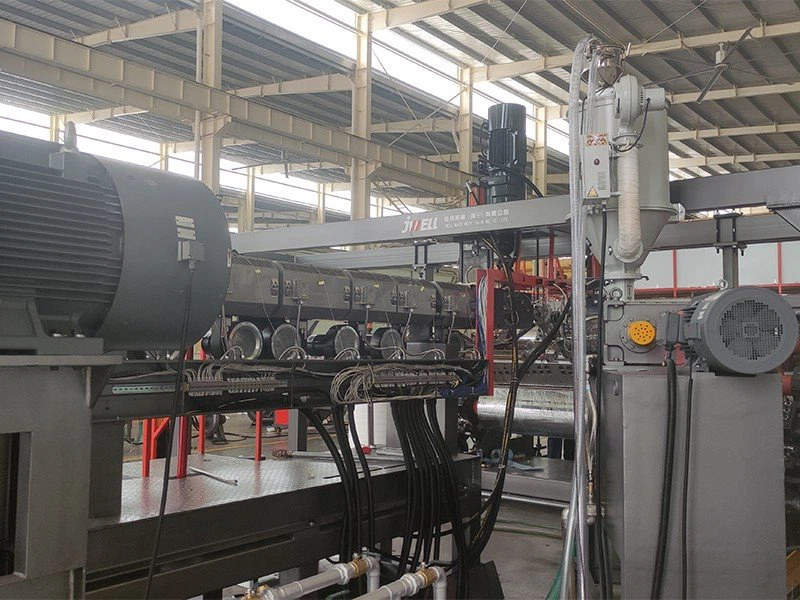
First things first, we need to know where the water is being used in a PP Board Extrusion Line. Generally, water is mainly used for cooling purposes. During the extrusion process, the molten PP material needs to be cooled down rapidly to form a solid board. This is where water comes in. It circulates through cooling systems like chillers, cooling tanks, and water jackets around the extruder barrels and dies.
But sometimes, there can be a lot of unnecessary water wastage. For example, old or inefficient cooling equipment might require more water flow than necessary to achieve the same cooling effect. Also, leaks in the water pipes or improper water management can lead to significant water loss.
2. Upgrade Your Cooling Equipment
One of the most effective ways to reduce water consumption is to upgrade your cooling equipment. Modern chillers and cooling towers are designed to be much more energy - and water - efficient than their older counterparts.
Newer chillers use advanced refrigeration technologies that can cool the water more effectively with less energy and water. They can maintain a stable temperature with a lower water flow rate. For instance, some chillers come with variable frequency drives (VFDs) that adjust the compressor speed according to the cooling demand. This means they use less water and electricity when the cooling load is low.
Cooling towers are another important part of the cooling system. Upgrading to a high - efficiency cooling tower can make a big difference. These towers are designed to maximize the evaporation of water while minimizing the amount of water that is lost through drift. They use advanced fill materials and distribution systems to ensure that the water is evenly distributed and cooled efficiently.
3. Implement a Closed - Loop Cooling System
A closed - loop cooling system is a great way to reduce water consumption. In a closed - loop system, the water is continuously circulated through the cooling equipment and back to the source. This means that the same water is reused over and over again, with only a small amount of make - up water needed to replace the water lost through evaporation.
Compared to an open - loop system, where water is used once and then discharged, a closed - loop system can save a huge amount of water. You can install heat exchangers in the closed - loop system to transfer the heat from the process water to a secondary coolant, such as air or another fluid. This way, the process water can be cooled without the need for large amounts of fresh water.
4. Regular Maintenance and Leak Detection
Regular maintenance of your PP Board Extrusion Line's water system is crucial. Leaks in the water pipes, valves, or fittings can lead to a significant amount of water wastage. Even a small leak can add up over time.
You should conduct regular inspections of the water system to check for leaks. Use pressure gauges and flow meters to monitor the water flow and pressure. If you notice any abnormal readings, it could be a sign of a leak. Fixing leaks as soon as possible can save a lot of water and prevent further damage to the equipment.
Also, make sure to clean and maintain your cooling equipment regularly. Buildup of dirt, scale, or algae in the cooling towers, chillers, or pipes can reduce the efficiency of the cooling system and increase water consumption. By keeping the equipment clean, you can ensure that it operates at its optimal level.
5. Optimize the Cooling Process Parameters
Another way to reduce water consumption is to optimize the cooling process parameters. You can adjust the temperature, flow rate, and pressure of the water according to the specific requirements of the PP board extrusion process.
For example, if you can slightly increase the temperature of the cooling water without affecting the quality of the PP board, you can reduce the amount of water needed for cooling. You can also experiment with different flow rates to find the minimum flow rate that still provides adequate cooling.
In addition, you can use sensors and automation systems to monitor and control the cooling process in real - time. These systems can adjust the water flow and temperature based on the actual process conditions, ensuring that the water is used as efficiently as possible.

6. Train Your Staff
Your staff plays a vital role in water conservation. Make sure they are trained on the importance of water conservation and the proper operation of the PP Board Extrusion Line's water system.
Train them on how to detect and report leaks, how to operate the cooling equipment correctly, and how to follow the optimized process parameters. Encourage them to come up with ideas for further reducing water consumption. By involving your staff in the water conservation efforts, you can create a culture of sustainability in your workplace.
Other Related Extrusion Lines
If you're interested in other types of extrusion lines, we also offer some great options. Check out our PC Hollow Sheet U - shaped U Locked Sheet Extrusion Line, PC Corrugated Plate Extrusion Line, and Automotive Interior TPU Over ABS Composite Panel Extrusion Line. These lines are also designed with efficiency and quality in mind.
Conclusion
Reducing the water consumption of a PP Board Extrusion Line is not only beneficial for the environment but also for your bottom line. By upgrading your cooling equipment, implementing a closed - loop system, conducting regular maintenance, optimizing process parameters, and training your staff, you can significantly cut down on water usage.
If you're interested in learning more about how we can help you reduce water consumption in your PP Board Extrusion Line or if you're thinking about purchasing a new extrusion line, don't hesitate to get in touch with us. We're here to assist you in making your extrusion process more efficient and sustainable.
References
- "Handbook of Plastic Extrusion Technology" by Allan A. Griff.
- "Water Conservation in Industrial Processes" by various industry experts.