

Hey there! As a supplier of thermoplastic lines, I often get asked about the acoustic performance of these products. So, I thought I'd write a blog post to share some insights on this topic.
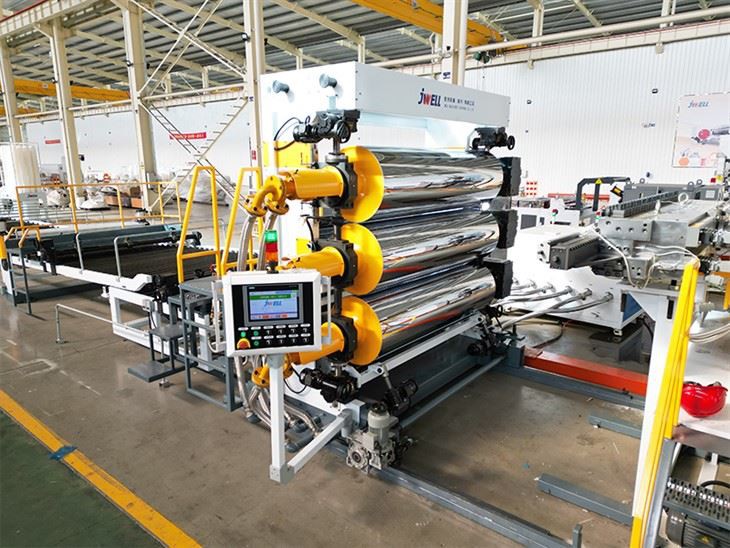
First off, let's talk about what thermoplastic lines are. Thermoplastics are a type of plastic that can be melted and reshaped multiple times. They're used in a wide range of applications, from automotive parts to consumer goods. Thermoplastic lines, specifically, are used to create various products through extrusion processes.
Now, onto the acoustic performance. Acoustic performance refers to how well a material can absorb, reflect, or transmit sound. When it comes to thermoplastic lines, their acoustic performance can vary depending on several factors.

One of the key factors is the type of thermoplastic material used. Different thermoplastics have different physical properties, which can affect how they interact with sound waves. For example, some thermoplastics may be more dense, which can make them better at blocking sound transmission. Others may have a more porous structure, which can help absorb sound.
Another factor is the thickness and density of the thermoplastic line. Generally, thicker and denser lines will have better sound-blocking capabilities. However, this also needs to be balanced with other considerations, such as cost and weight.
The manufacturing process can also play a role in the acoustic performance. For instance, the way the thermoplastic is extruded can affect its internal structure, which in turn can impact how it interacts with sound.
Let's take a look at some specific applications where the acoustic performance of thermoplastic lines is important.
In the automotive industry, thermoplastic lines are used in various components. For example, the Automotive Flame Retardant Thermoplastic Sheet Production Line is used to produce sheets that can be used for interior panels. These panels need to have good acoustic performance to reduce noise inside the vehicle. A quieter cabin not only enhances the driving experience but also helps with driver concentration and reduces fatigue.
Similarly, the Automotive Sound Deadening Mat Production Line is used to create mats that are placed in different parts of the car to absorb and dampen sound. These mats are made from thermoplastic materials and their acoustic performance is crucial for minimizing road noise, engine noise, and other external sounds.
In the construction industry, thermoplastic lines can be used for various purposes, such as creating partitions or insulation materials. Good acoustic performance in these applications can help create a more comfortable and quiet indoor environment. For example, partitions made from thermoplastic materials with high sound absorption capabilities can reduce noise transfer between different rooms.
The Plastic Geogrid and Geocell Production Line is another area where thermoplastic lines are used. While the primary function of geogrids and geocells is often related to soil stabilization, they can also have an impact on the acoustic environment in some cases. For example, in areas near roads or railways, these structures can help reduce the spread of noise.
Now, how can we measure the acoustic performance of thermoplastic lines? There are several standard tests that can be used. One common test is the Sound Transmission Class (STC) test. This test measures how well a material can block airborne sound. A higher STC rating means better sound-blocking performance.
Another test is the Noise Reduction Coefficient (NRC). This test measures the amount of sound absorbed by a material. An NRC value of 1.0 means that the material absorbs all the sound that hits it, while a value of 0.0 means it reflects all the sound.
As a supplier of thermoplastic lines, we understand the importance of acoustic performance in different applications. We work closely with our customers to develop products that meet their specific acoustic requirements. We use advanced manufacturing techniques and high-quality materials to ensure that our thermoplastic lines have excellent acoustic properties.
If you're in the market for thermoplastic lines and are looking for products with great acoustic performance, we'd love to hear from you. Whether you're in the automotive, construction, or any other industry, we can provide you with customized solutions. Don't hesitate to reach out and start a conversation about your needs. We're here to help you find the best thermoplastic line products for your projects.
References
- "Handbook of Thermoplastics" by O. Olabisi
- "Acoustics: Sound Fields and Transducers" by Neville G. Fletcher and Thomas D. Rossing
So, that's a wrap on the acoustic performance of thermoplastic lines. I hope this blog post has given you a better understanding of this topic. If you have any questions or need more information, feel free to drop us a message.