

As a seasoned supplier of FRP (Fiber Reinforced Plastic) production lines, I've witnessed firsthand the transformative impact these lines have on various industries. One of the most frequently asked questions I encounter is about the thermal insulation performance of products manufactured using our FRP production lines. In this blog, I'll delve into the intricacies of FRP's thermal insulation capabilities, exploring the science behind it and its real - world applications.
Understanding FRP and Its Composition
FRP is a composite material made up of a polymer matrix reinforced with fibers. The polymer matrix can be a variety of resins, such as polyester, vinyl ester, or epoxy, while the fibers are typically glass, carbon, or aramid. This combination of materials results in a product that is not only lightweight and strong but also has unique thermal properties.
The thermal insulation performance of FRP products is primarily determined by the properties of the polymer matrix and the fiber reinforcement. Polymers generally have low thermal conductivity, meaning they are poor conductors of heat. When combined with fibers, the overall structure of the FRP forms a barrier that inhibits the transfer of heat.
The Science of Thermal Insulation in FRP
Thermal insulation is based on the principle of reducing heat transfer. There are three main modes of heat transfer: conduction, convection, and radiation. Let's examine how FRP addresses each of these modes.
Conduction
Conduction is the transfer of heat through a material by direct molecular contact. In FRP, the polymer matrix acts as an insulator because polymers have long - chain molecular structures that impede the movement of heat - carrying molecules. The fibers, on the other hand, can also contribute to reducing conduction. For example, glass fibers, which are commonly used in FRP, have relatively low thermal conductivity compared to metals. When the fibers are dispersed throughout the polymer matrix, they create a tortuous path for heat to travel, further reducing the rate of conduction.
Convection
Convection involves the transfer of heat by the movement of fluids (liquids or gases). In FRP products, the solid structure prevents the free movement of fluids, thus minimizing convective heat transfer. For instance, in an FRP panel, the dense and continuous nature of the material does not allow air or other fluids to flow freely through it, acting as a barrier against convective heat loss or gain.
Radiation
Radiation is the transfer of heat through electromagnetic waves. FRP can be engineered to have reflective or absorptive properties to manage radiative heat transfer. Some FRP products are coated with special materials that reflect infrared radiation, reducing the amount of heat absorbed from the environment. Others are designed to absorb and dissipate radiation in a controlled manner, depending on the specific application requirements.
Factors Affecting the Thermal Insulation Performance of FRP Products
Several factors can influence the thermal insulation performance of products produced by our FRP production lines.
Fiber Type and Content
The type of fiber used in FRP has a significant impact on its thermal properties. As mentioned earlier, glass fibers have relatively low thermal conductivity. Increasing the fiber content in the FRP can enhance its thermal insulation performance up to a certain point. However, too high a fiber content can lead to issues such as poor resin wet - out and reduced mechanical properties.
Resin Type
Different resins have different thermal conductivities. For example, epoxy resins generally have better thermal insulation properties compared to some polyester resins. The choice of resin depends on the specific application and the required balance between thermal insulation, mechanical strength, and chemical resistance.
Product Thickness
Thicker FRP products generally provide better thermal insulation. As the thickness increases, the path for heat transfer becomes longer, and the overall resistance to heat flow increases. However, increasing the thickness also adds to the cost and weight of the product, so a balance must be struck based on the application requirements.
Real - World Applications of FRP's Thermal Insulation
The excellent thermal insulation performance of FRP products makes them suitable for a wide range of applications.
Building and Construction
In the building industry, FRP panels are used for roofing, wall cladding, and insulation. Their thermal insulation properties help to reduce energy consumption by keeping buildings cool in summer and warm in winter. For example, FRP roofing panels can significantly reduce the heat transfer from the sun into the building, reducing the need for air - conditioning.
Industrial Equipment
FRP is also used in industrial equipment such as storage tanks, pipes, and ducts. In chemical processing plants, FRP pipes with good thermal insulation can prevent heat loss from hot fluids being transported, improving energy efficiency. Moreover, the corrosion - resistant nature of FRP makes it an ideal choice for these applications in harsh industrial environments.
Transportation
In the transportation sector, FRP components are used in vehicles to improve energy efficiency. For example, FRP insulation panels can be used in the interior of trucks and buses to reduce the heat transfer between the engine compartment and the passenger area, improving the comfort of passengers and reducing the load on the air - conditioning system.
Comparing FRP with Other Insulation Materials
When considering thermal insulation materials, it's important to compare FRP with other commonly used materials such as foam insulation, fiberglass batts, and mineral wool.
Foam Insulation
Foam insulation is known for its high insulation value. However, it may not be as durable as FRP, especially in harsh environments. FRP offers better mechanical strength and resistance to chemicals and moisture, making it a more suitable choice for long - term applications in industrial and outdoor settings.
Fiberglass Batts
Fiberglass batts are widely used in residential insulation. While they are effective in reducing heat transfer, they can be difficult to install in complex shapes. FRP, on the other hand, can be molded into various shapes and sizes, providing more flexibility in design and installation.
Mineral Wool
Mineral wool is another popular insulation material. It has good fire - resistance properties but can be heavy and may require additional support structures. FRP is lightweight, which can reduce the overall weight of the structure and simplify the installation process.
Our FRP Production Line and Product Quality
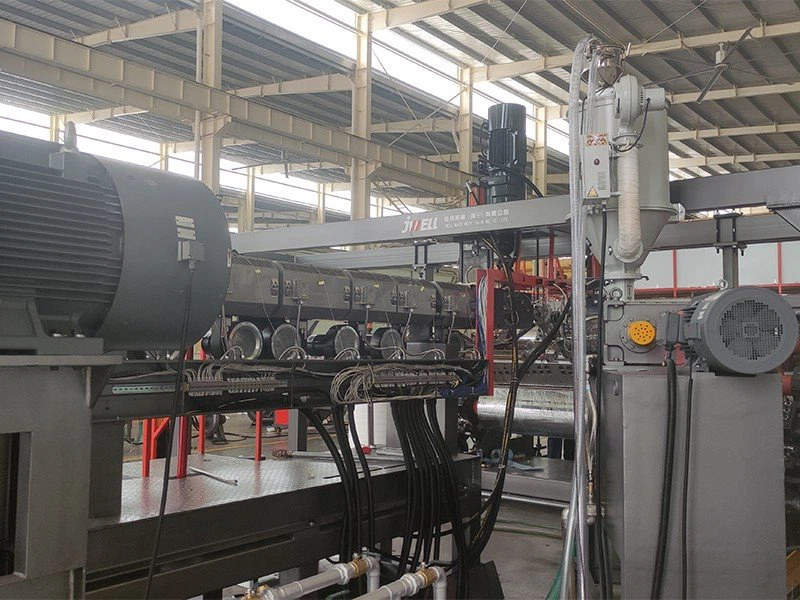
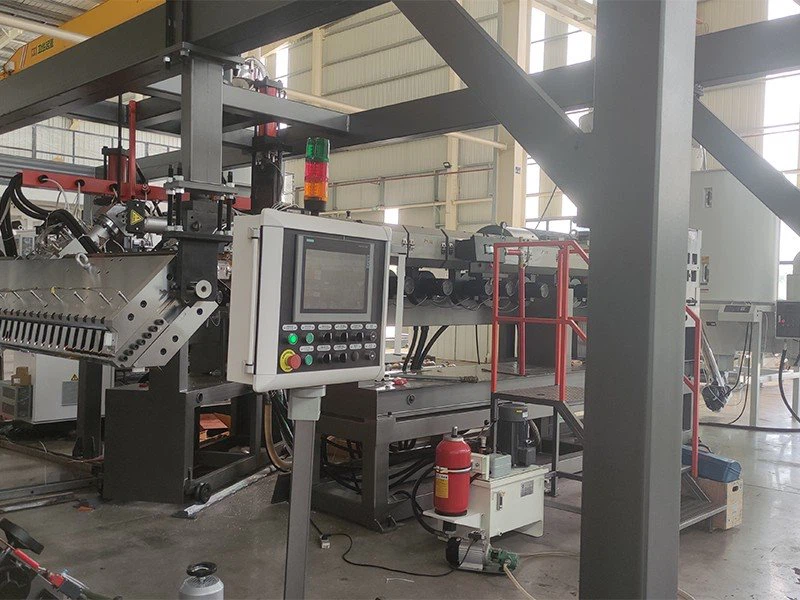
At our company, we are committed to producing high - quality FRP products with excellent thermal insulation performance. Our PC Corrugated Plate Extrusion Line is designed to produce corrugated FRP plates with precise dimensions and consistent thermal properties. The line uses advanced extrusion technology to ensure uniform distribution of fibers and resin, resulting in products with optimal thermal insulation.
Our PEEK PPS ABS Cold Extrusion Rod and Plate Production Line is capable of manufacturing FRP rods and plates with high - performance polymers. These products are suitable for applications where high - strength and good thermal insulation are required, such as in aerospace and automotive industries.
The Automotive Flame Retardant Thermoplastic Sheet Production Line is specifically designed to produce FRP sheets for automotive applications. These sheets not only have excellent thermal insulation but also meet strict flame - retardant standards, ensuring the safety of passengers.
Conclusion
The thermal insulation performance of products produced by our FRP production lines is a result of the careful combination of materials and advanced manufacturing processes. FRP offers a unique set of advantages, including excellent thermal insulation, mechanical strength, corrosion resistance, and design flexibility. Whether it's for building construction, industrial equipment, or transportation, FRP products can provide effective solutions for reducing energy consumption and improving overall performance.
If you're interested in learning more about our FRP production lines or the thermal insulation products we can offer, I encourage you to reach out to us for a detailed discussion. We're here to help you find the best solutions for your specific needs.
References
- "Composite Materials Handbook" by ASM International
- "Thermal Insulation: Principles and Practice" by Arun K. Gupta
- "Fiber - Reinforced Polymer Composites: Materials, Manufacturing, and Design" by P. K. Mallick