

As a seasoned supplier of board extrusion lines, I've witnessed firsthand the incredible versatility of these machines. Board extrusion lines are capable of processing a wide range of materials, each with its unique properties and applications. In this blog post, I'll delve into the various materials that can be processed by a board extrusion line, highlighting their characteristics and the benefits they offer.
Polyethylene (PE)
Polyethylene is one of the most commonly processed materials in board extrusion lines. It is a thermoplastic polymer known for its excellent chemical resistance, low moisture absorption, and high flexibility. PE comes in different densities, including low-density polyethylene (LDPE), linear low-density polyethylene (LLDPE), and high-density polyethylene (HDPE), each with its own set of properties.
- LDPE: LDPE is a soft and flexible material with good transparency and impact resistance. It is often used in applications such as packaging films, agricultural films, and toys.
- LLDPE: LLDPE has similar properties to LDPE but offers better tensile strength and puncture resistance. It is commonly used in applications such as stretch films, trash bags, and geomembranes.
- HDPE: HDPE is a rigid and strong material with high chemical resistance and low permeability. It is widely used in applications such as pipes, containers, and automotive parts.
Polypropylene (PP)
Polypropylene is another popular material processed by board extrusion lines. It is a thermoplastic polymer known for its high stiffness, excellent chemical resistance, and low density. PP is available in different grades, including homopolymer and copolymer, each with its own set of properties.
- Homopolymer PP: Homopolymer PP is a rigid and strong material with high melting point and good chemical resistance. It is commonly used in applications such as automotive parts, household appliances, and packaging.
- Copolymer PP: Copolymer PP is a more flexible and impact-resistant material than homopolymer PP. It is often used in applications such as food packaging, medical devices, and furniture.
Polystyrene (PS)
Polystyrene is a thermoplastic polymer known for its excellent transparency, rigidity, and ease of processing. It is available in different forms, including general-purpose polystyrene (GPPS) and high-impact polystyrene (HIPS), each with its own set of properties.
- GPPS: GPPS is a clear and brittle material with high transparency and good dimensional stability. It is commonly used in applications such as disposable tableware, packaging, and optical lenses.
- HIPS: HIPS is a tough and impact-resistant material with good stiffness and dimensional stability. It is often used in applications such as electronics housings, toys, and automotive parts.
Polyvinyl Chloride (PVC)
Polyvinyl chloride is a widely used thermoplastic polymer known for its excellent chemical resistance, flame retardancy, and low cost. PVC is available in different forms, including rigid PVC and flexible PVC, each with its own set of properties.
- Rigid PVC: Rigid PVC is a strong and rigid material with high chemical resistance and good dimensional stability. It is commonly used in applications such as pipes, window frames, and siding.
- Flexible PVC: Flexible PVC is a soft and flexible material with good elasticity and chemical resistance. It is often used in applications such as cables, flooring, and medical devices.
Polyethylene Terephthalate (PET)
Polyethylene terephthalate is a thermoplastic polymer known for its excellent clarity, strength, and barrier properties. PET is commonly used in applications such as beverage bottles, food packaging, and textile fibers.
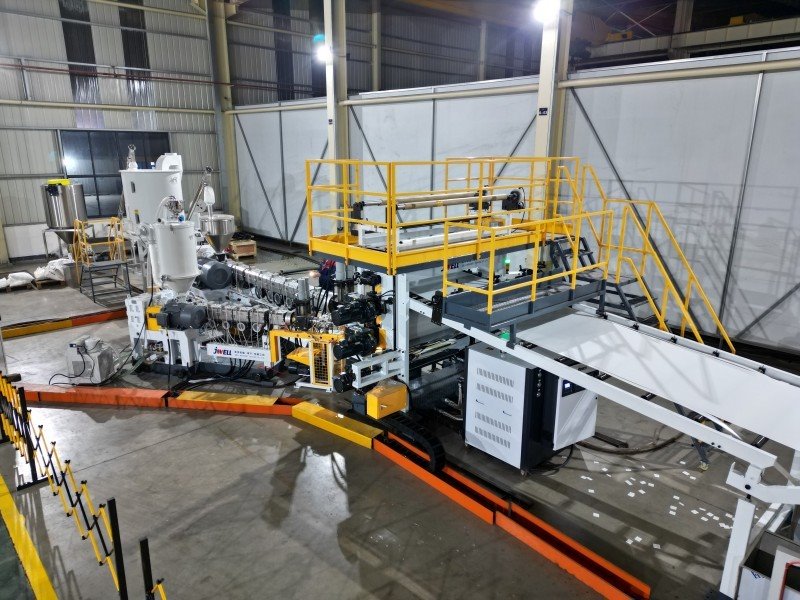
Our Dryer-free Vented PET Sheet Extrusion Line is specifically designed to process PET materials efficiently and effectively. This advanced extrusion line eliminates the need for a dryer, reducing energy consumption and production costs. It also features a vented screw design that allows for better degassing and moisture removal, resulting in high-quality PET sheets with excellent clarity and mechanical properties.
Other Materials
In addition to the materials mentioned above, board extrusion lines can also process a variety of other materials, including acrylonitrile butadiene styrene (ABS), polycarbonate (PC), and polyamide (PA).

- ABS: ABS is a tough and impact-resistant material with good dimensional stability and surface finish. It is commonly used in applications such as automotive parts, electronics housings, and toys.
- PC: PC is a clear and strong material with high impact resistance and heat resistance. It is often used in applications such as automotive headlights, safety glasses, and electronic displays.
- PA: PA is a strong and lightweight material with good abrasion resistance and chemical resistance. It is commonly used in applications such as automotive parts, industrial components, and textile fibers.
Conclusion
Board extrusion lines are incredibly versatile machines that can process a wide range of materials, each with its unique properties and applications. Whether you're looking to produce packaging materials, automotive parts, or consumer goods, there's a board extrusion line that can meet your needs.
As a leading supplier of board extrusion lines, we offer a comprehensive range of solutions to help you achieve your production goals. Our PS PP Sheet Extrusion Line is designed to process PS and PP materials efficiently and effectively, while our Refrigerator Board Extrusion Line is specifically tailored to the production of refrigerator boards.
If you're interested in learning more about our board extrusion lines or have any questions about the materials that can be processed, please don't hesitate to contact us. Our team of experts is always ready to assist you and provide you with the information you need to make an informed decision.
References
- Modern Plastics Encyclopedia.
- Handbook of Polymer Science and Technology.
- Plastics Technology Magazine.