

Adjusting the width of sheets produced by a PC hollow sheet extrusion line is a crucial process that directly impacts the versatility and marketability of the final product. As a leading supplier of PC Hollow Sheet Extrusion Lines, we understand the importance of providing our customers with comprehensive guidance on this topic. In this blog post, we will delve into the various methods and considerations for adjusting the sheet width, ensuring that you can optimize your production process and achieve the desired results.
Understanding the Basics of PC Hollow Sheet Extrusion
Before we discuss how to adjust the sheet width, it is essential to have a basic understanding of the PC hollow sheet extrusion process. PC hollow sheets are typically produced using an extrusion line that consists of several key components, including an extruder, a die, a calibration unit, a cooling system, and a cutting device.
The extruder melts the PC resin and pumps it through the die, which shapes the molten plastic into a sheet with a specific cross - sectional profile. The calibration unit then helps to control the thickness and shape of the sheet, while the cooling system solidifies the sheet. Finally, the cutting device cuts the sheet to the desired length.
Factors Affecting Sheet Width
Several factors can influence the width of the sheets produced by a PC hollow sheet extrusion line:
- Die Design: The die is one of the most critical components in determining the initial width of the sheet. Dies come in different designs and can be customized to produce sheets of various widths. A wider die will result in a wider sheet, but it is not always as simple as just using a broader die. The flow of the molten plastic through the die must be carefully regulated to ensure uniform thickness and quality across the width of the sheet.
- Extrusion Rate: The speed at which the plastic is extruded from the die can also affect the sheet width. A higher extrusion rate may cause the sheet to expand more, resulting in a wider sheet. However, this can also lead to issues such as uneven thickness if not properly controlled.
- Calibration and Cooling: The calibration unit and the cooling system play a vital role in setting the final width of the sheet. The calibration unit helps to shape the molten sheet and ensures that it maintains its dimensions. The cooling process also affects the shrinkage of the sheet, which can impact the final width.
Methods for Adjusting Sheet Width
There are several methods that can be used to adjust the width of the sheets produced by a PC hollow sheet extrusion line:

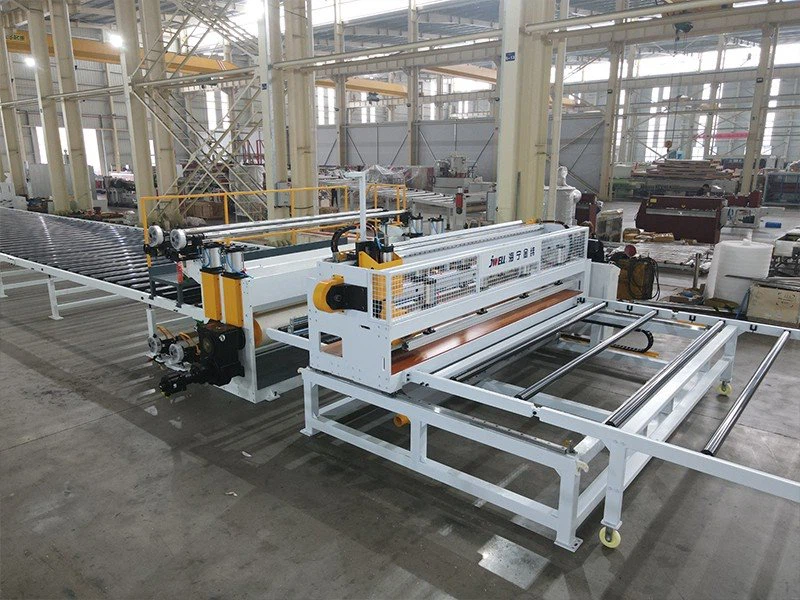
- Die Modification: One of the most straightforward ways to adjust the sheet width is by modifying the die. This can involve changing the die lips or using a die with a different width. However, die modification can be a costly and time - consuming process, especially if it requires custom manufacturing.
- Adjusting the Extrusion Process Parameters: Another way to adjust the sheet width is by modifying the extrusion process parameters. For example, increasing the screw speed in the extruder can increase the extrusion rate, which may lead to a wider sheet. However, it is essential to note that changing the extrusion rate can also affect other properties of the sheet, such as thickness and mechanical strength. Therefore, careful monitoring and optimization are required.
- Calibration and Post - Processing: The calibration unit can be adjusted to control the width of the sheet during the production process. Additionally, post - processing techniques such as trimming can be used to achieve the desired width. Trimming involves cutting off the edges of the sheet to achieve a precise width. This method is relatively simple and can be used to correct minor variations in sheet width.
Considerations for Adjusting Sheet Width
When adjusting the width of the sheets produced by a PC hollow sheet extrusion line, there are several important considerations:
- Quality Control: Any adjustment to the sheet width should be carefully monitored to ensure that the quality of the sheet is not compromised. This includes checking for uniform thickness, surface finish, and mechanical properties.
- Production Efficiency: The adjustment method should be chosen in a way that minimizes downtime and maximizes production efficiency. For example, die modification may require significant downtime for installation and adjustment, while adjusting process parameters can be done more quickly.
- Cost: The cost of adjusting the sheet width should also be considered. Die modification can be expensive, while adjusting process parameters and post - processing techniques may be more cost - effective.
Other Related Production Lines
As a supplier, we also offer other production lines that can meet different customer needs. For example, if you are interested in producing PVC faux marble sheets, our PVC Faux Marble Sheet Production Line is a great choice. This line is designed to produce high - quality PVC faux marble sheets with excellent decoration performance.
If you need to produce plastic geogrids and geocells, our Plastic Geogrid and Geocell Production Line can meet your requirements. It is capable of manufacturing plastic geogrids and geocells with different specifications and strengths.
For those who want to produce PVDF thick plates and PP PE boards, our PVDF Thick Plate and PP PE Board Extrusion Line is an ideal option. It can produce high - quality thick plates and boards with precise dimensions and excellent mechanical properties.
Conclusion
Adjusting the width of the sheets produced by a PC hollow sheet extrusion line is a complex but achievable task. By understanding the factors that affect sheet width, choosing the appropriate adjustment methods, and considering important factors such as quality control, production efficiency, and cost, you can optimize your production process and produce sheets of the desired width.
If you are interested in our PC Hollow Sheet Extrusion Lines or any of our other production lines, we encourage you to contact us for more information and to discuss your specific requirements. Our team of experts is ready to assist you in finding the best solution for your production needs.
References
- "Plastics Extrusion Technology Handbook" by Allan A. Griff.
- "Extrusion Dies: Design and Engineering Computations" by John A. Brydson.