

Temperature control is a critical aspect of the sheet extrusion process, significantly influencing the quality, appearance, and performance of the final product. As a trusted sheet extrusion line supplier, we understand the challenges and intricacies involved in maintaining optimal temperature settings. In this blog post, we will explore the key factors and strategies for adjusting the temperature in a sheet extrusion line.
Understanding the Importance of Temperature in Sheet Extrusion
The temperature in a sheet extrusion line affects several crucial aspects of the process:
- Material Flow: Proper temperature ensures that the polymer material flows smoothly through the extruder, die, and other components of the line. If the temperature is too low, the material may become too viscous, leading to poor flow and uneven thickness in the extruded sheet. On the other hand, if the temperature is too high, the material may degrade, resulting in discoloration, reduced mechanical properties, and surface defects.
- Product Quality: Temperature control directly impacts the quality of the extruded sheet. It affects the sheet's transparency, gloss, strength, and flexibility. By maintaining the right temperature, we can achieve consistent product quality and meet the specific requirements of our customers.
- Energy Efficiency: Optimizing the temperature settings in the extrusion line can also lead to significant energy savings. By using the appropriate temperature for each stage of the process, we can reduce energy consumption and lower production costs.
Factors Affecting Temperature in a Sheet Extrusion Line
Several factors can influence the temperature in a sheet extrusion line:
- Material Properties: Different polymers have different melting points and processing temperatures. It is essential to understand the specific requirements of the material being used and adjust the temperature accordingly. For example, PVC has a lower melting point compared to PET, so the temperature settings for a PVC Transparent Sheet and Colored Sheet Extrusion Line will be different from those for a Dryer-free Vented PET Sheet Extrusion Line.
- Extruder Design: The design of the extruder, including the screw configuration, barrel length, and heating zones, can affect the temperature distribution and heat transfer within the extruder. A well-designed extruder can provide better temperature control and more uniform melting of the material.
- Die Design: The die is responsible for shaping the extruded material into a sheet. The design of the die, including the die lip opening, land length, and temperature control channels, can influence the temperature and flow of the material as it exits the die. A properly designed die can help to ensure a consistent sheet thickness and quality.
- Cooling System: The cooling system plays a crucial role in controlling the temperature of the extruded sheet. It helps to solidify the sheet and prevent it from deforming or sticking to the rollers. The cooling rate and temperature of the cooling medium (such as water or air) can affect the final properties of the sheet.
Strategies for Adjusting the Temperature in a Sheet Extrusion Line
To achieve optimal temperature control in a sheet extrusion line, the following strategies can be employed:
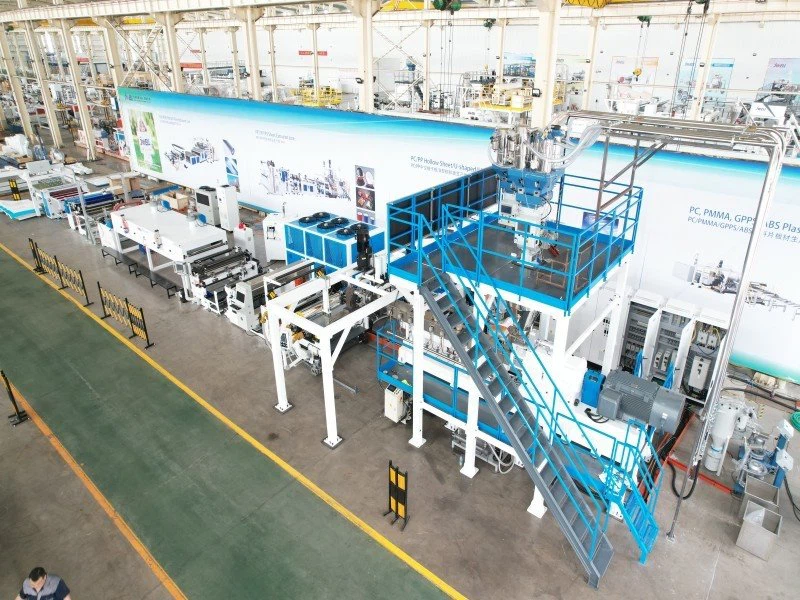

- Preheating the Material: Preheating the polymer material before it enters the extruder can help to reduce the energy required for melting and improve the flow properties of the material. This can be done using a preheater or by adjusting the temperature of the hopper.
- Setting the Extruder Temperature Zones: The extruder is typically divided into several temperature zones, each with its own heating and cooling system. By setting the temperature of each zone according to the material's requirements, we can ensure a uniform melting and flow of the material through the extruder.
- Monitoring and Controlling the Die Temperature: The die temperature is critical for achieving a consistent sheet thickness and quality. By using temperature sensors and controllers, we can monitor and adjust the die temperature to ensure that it remains within the desired range.
- Adjusting the Cooling Rate: The cooling rate of the extruded sheet can affect its mechanical properties and appearance. By adjusting the cooling rate, we can control the crystallization and orientation of the polymer molecules, which can improve the strength and transparency of the sheet.
- Using Insulation and Heating Elements: Insulation can help to reduce heat loss from the extruder and die, while heating elements can be used to maintain the temperature of specific components. This can improve the energy efficiency of the extrusion line and ensure more precise temperature control.
Case Study: Temperature Adjustment in a PET GAG Sheet Extrusion Machine
Let's take a look at a case study of temperature adjustment in a PET GAG Sheet Extrusion Machine. PET GAG sheets are widely used in packaging applications due to their excellent clarity, strength, and barrier properties.
In this case, the extrusion line was experiencing issues with uneven sheet thickness and surface defects. After a thorough analysis, it was found that the temperature settings in the extruder and die were not optimized. The temperature in the first few zones of the extruder was too low, causing the material to flow unevenly. The die temperature was also too high, leading to excessive melting and poor surface quality.
To address these issues, the following temperature adjustments were made:
- Extruder Temperature Zones: The temperature in the first few zones of the extruder was increased to ensure a more uniform melting of the PET material. The temperature in the later zones was adjusted to maintain the proper viscosity and flow of the material.
- Die Temperature: The die temperature was reduced to prevent excessive melting and improve the surface quality of the sheet. A temperature controller was installed to monitor and adjust the die temperature in real-time.
- Cooling System: The cooling rate of the extruded sheet was adjusted to ensure proper crystallization and orientation of the PET molecules. This helped to improve the strength and transparency of the sheet.
After implementing these temperature adjustments, the extrusion line was able to produce high-quality PET GAG sheets with consistent thickness and excellent surface finish. The production efficiency was also improved, resulting in cost savings for the customer.
Conclusion
Temperature control is a critical factor in the sheet extrusion process. By understanding the importance of temperature, the factors that affect it, and the strategies for adjusting it, we can ensure the production of high-quality sheets with consistent properties. As a sheet extrusion line supplier, we are committed to providing our customers with the latest technology and expertise to help them optimize their temperature control and achieve the best possible results.
If you are interested in learning more about our sheet extrusion lines or have any questions about temperature adjustment, please feel free to contact us. We would be happy to discuss your specific requirements and provide you with a customized solution.
References
- "Extrusion of Plastics: Theory and Practice" by James L. White and Joseph F. Carley
- "Handbook of Plastic Extrusion Technology" by John A. Brydson
- "Plastics Extrusion: Principles and Practice" by Christopher Rauwendaal